Finish Restoration That Matches Factory Appearance
Auto Paint & Refinishing in Clio for paint correction after collision repairs or cosmetic damage
Paint damage from accidents, environmental exposure, or failed clear coat compromises both vehicle appearance and the underlying metal's protection against corrosion. Auto paint and refinishing services restore factory-quality finish through color-matched application, blending techniques that eliminate visible repair boundaries, and clear coat protection that shields the paint from UV degradation and chemical exposure. Ronnie's Auto Collision & Towing handles refinishing as part of complete body repair or as standalone service for vehicles with finish deterioration, oxidation, or cosmetic damage that hasn't affected underlying panels.
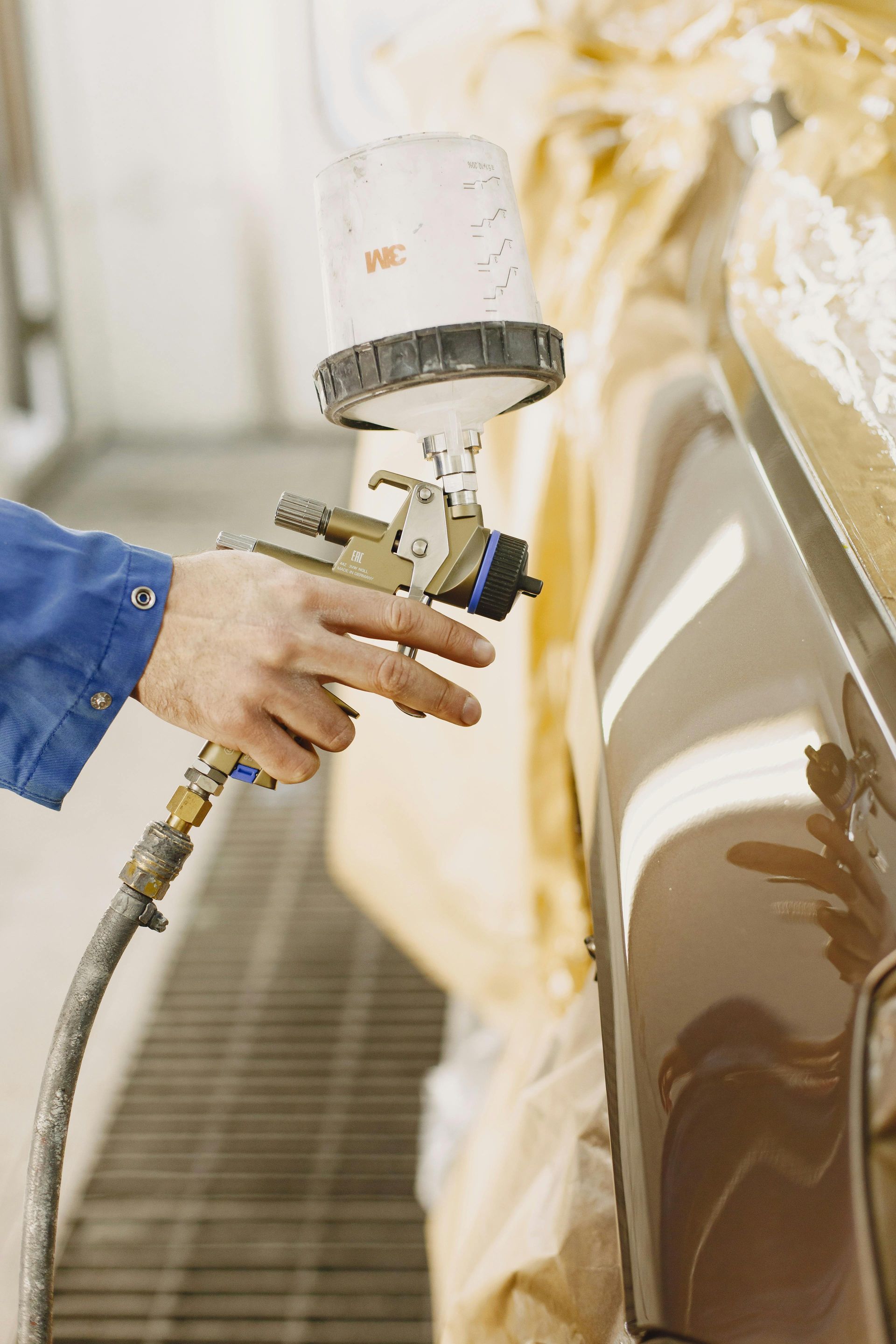
The refinishing process begins with surface preparation—damaged paint is stripped to bare metal or sound substrate, imperfections are filled and sanded smooth, and the surface is cleaned to remove contaminants that cause adhesion failure. Primer is applied to seal the metal and provide uniform base for color coats, then multiple layers of color-matched paint are sprayed, followed by clear coat that provides gloss and protection. Blending extends beyond the damaged area into adjacent panels, ensuring that color and texture transitions are invisible even under direct sunlight where mismatches become obvious.
Arrange a paint evaluation to assess finish condition and determine whether spot repair or full panel refinishing produces better results.
Why Professional Refinishing Maintains Long-Term Appearance
Paint refinishing requires precise color matching using the vehicle's paint code as a starting point, then adjusting the formula to account for factory variation and fading that occurs over years of sun exposure. The mixed paint is tested on sample panels under different lighting conditions to verify match accuracy before application begins. Modern multi-stage paints—especially metallics and pearls—require specific spray techniques to achieve consistent flake orientation and depth that matches surrounding factory finish.
After refinishing, the vehicle's appearance shows uniform color across all panels without the streaking, orange peel texture, or dust contamination that indicates rushed or improperly controlled application. Clear coat provides the glossy finish and protects color layers from UV radiation that causes fading—without adequate clear coat thickness, paint deteriorates rapidly under Michigan's sun exposure and harsh winter conditions. Properly cured paint resists chipping from road debris and maintains its gloss through repeated washing without dulling or developing water spots that etch into soft finish.
Refinishing also addresses corrosion prevention by sealing bare metal completely—any gaps in primer or paint coverage allow moisture to reach the steel, starting rust that spreads beneath the finish and causes bubbling or flaking within months. Ronnie's Auto Collision & Towing applies corrosion-resistant primer to bare metal, ensures complete coverage in seams and edges where moisture collects, and uses paint systems designed for durability under road salt exposure and temperature cycling that Michigan vehicles experience year-round.
What Vehicle owners usually ask
Vehicle owners in Clio frequently ask about color matching accuracy and how refinishing holds up compared to the original factory paint.
What makes color matching difficult on older vehicles?
Factory paint fades unevenly depending on sun exposure—horizontal surfaces like hoods and roofs fade faster than vertical doors and fenders—so matching requires adjusting the paint formula to match the current faded color rather than the original factory specification, then blending across panels to hide any remaining variation.
How does paint blending prevent visible repair lines?
Blending gradually transitions the new paint into existing finish by extending color coats beyond the damaged area and feathering the edge, then applying clear coat across a wider area that encompasses both new and old paint, creating seamless appearance without a detectable boundary where repair ends.
Why does refinishing require climate-controlled conditions?
Temperature and humidity affect how paint flows, how quickly solvents evaporate, and how the finish cures—cold temperatures cause paint to dry too slowly and sag, while high humidity traps moisture under the finish causing blushing or adhesion failure that leads to peeling.
What's included in complete refinishing beyond just spraying paint?
The process includes stripping old finish, repairing surface imperfections, applying primer, color sanding between coats, final wet sanding and buffing to remove orange peel, and curing time before the vehicle is exposed to weather or washing that could damage uncured paint.
How long before refinished panels can be washed or waxed?
Paint requires 30 to 90 days to fully cure depending on the system used—during this period, hand washing with mild soap is safe, but automatic car washes, harsh chemicals, and wax application should be avoided because they can mar or contaminate finish that hasn't reached full hardness.
Ronnie's Auto Collision & Towing provides professional paint and refinishing services that restore vehicle appearance and protect body panels from corrosion, supporting drivers throughout Clio with quality refinishing as part of collision repair or standalone cosmetic restoration. Call (810) 639-7619 to request a paint repair consultation and discuss refinishing options for your vehicle.